Tuile: The Edible Roof Tile
That crisp curved shard on a fine dessert is a tuile — and making one is a race against cooling.
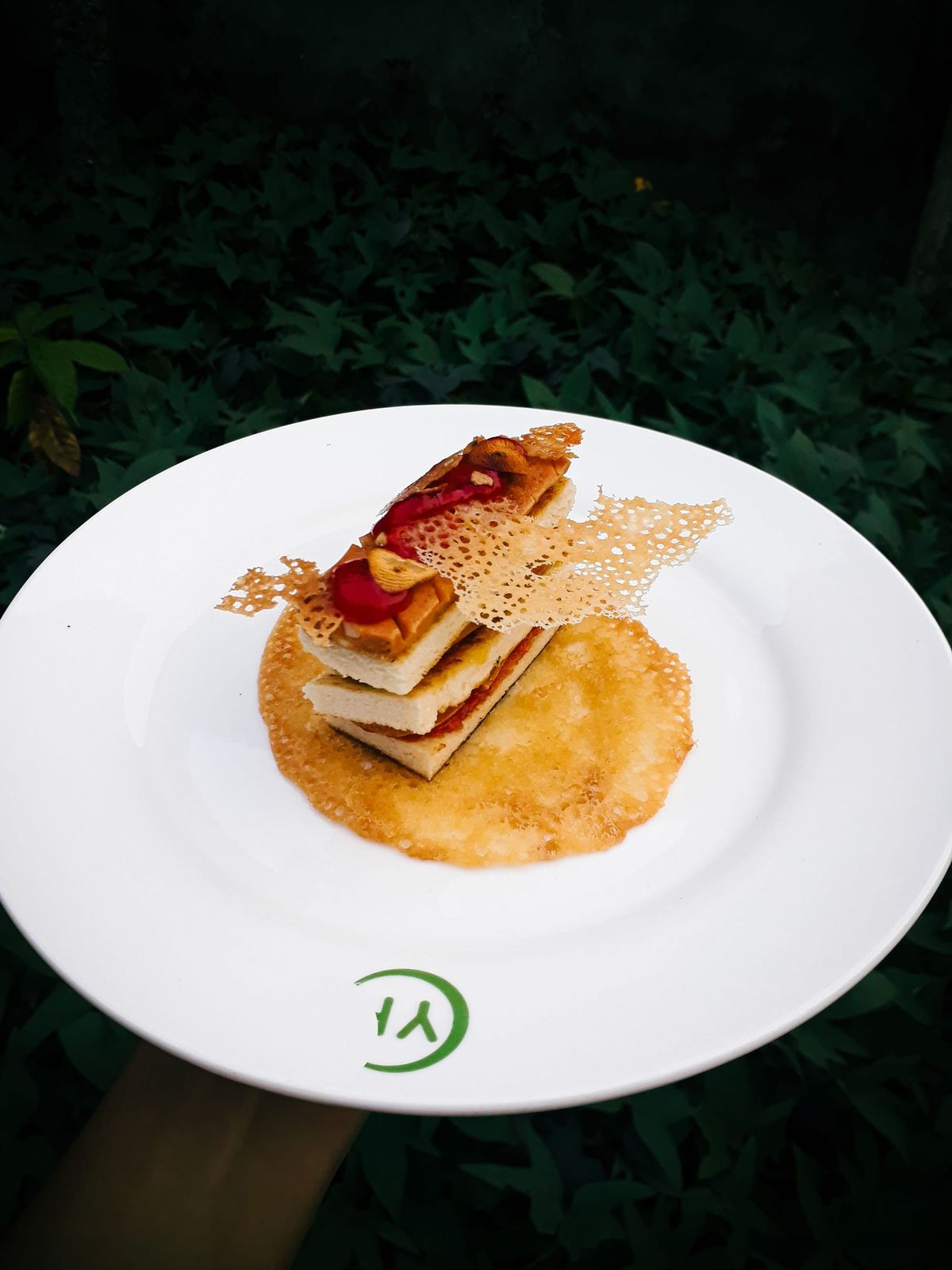
On an ambitious dessert there is often a thin, curved shard that snaps like glass. It is a tuile -- French for "tile" -- shaped to resemble the curved clay tiles on the roofs of provincial French houses.
It is one of the simplest things a pastry kitchen makes, and one of the least forgiving.
The batter is almost nothing: sugar, egg whites, butter, a little flour. The sugar is the whole point: as the wafer bakes and cools it sets hard and brittle, which is what makes a tuile shatter rather than bend.
You spread it very thin, a millimeter or less, into a small circle on a lined tray. Thickness decides everything: a shade too thick and you get a biscuit, not a pane of glass. It bakes fast in a hot oven, around 180°C (350°F) -- four or five minutes, just until the edges take on color.
Then comes the part that separates a tuile from a cookie.
While it is still hot and soft, you lift it and shape it -- draped over a rolling pin or a wine bottle for the classic curve, rolled around a spoon handle for a cigar, pressed into a cup to cradle a scoop of sorbet. You have seconds. As it cools it sets hard, and a tuile you were a moment too slow to bend will crack in your fingers. The craft is a race against cooling.
What it is for is contrast. A tuile is texture, added on purpose -- a brittle crackle against something soft and cold, a panna cotta or a mousse or a quenelle of ice cream. It gives the fork something to break.
It need not be sweet. Trade the sugar for grated parmesan, fold in thyme or rosemary, and the same idea makes a savory wafer for an aperitif: lace-thin, sharp, gone in a bite.
For something named after a roof, a tuile keeps none of a roof's permanence. It is mixed in minutes, shaped in seconds, eaten in one. The whole point of the tile is that it breaks.


